
Your VA Loan Benefit Isn't a One-Time Deal: How to Unlock It Again (and Again)
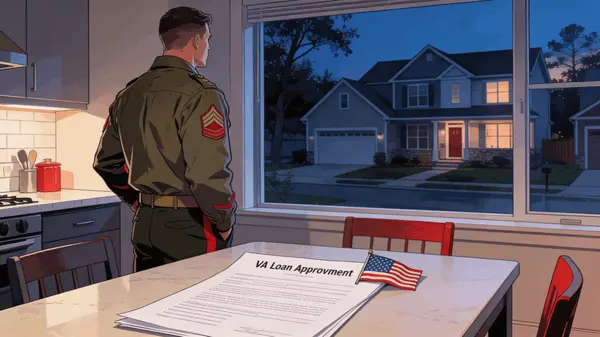
A Marine veteran called me last month thinking he'd "used up" his VA loan benefit forever. He'd bought his first home in Oconee County three years ago with a VA loan, and now with a job relocation on the horizon, he assumed he'd need a conventional loan with a significant down payment—money he didn't necessarily need to spend.

Here's what he didn't understand: Your VA entitlement isn't a one-time benefit that disappears after your first home purchase. In most cases, you can restore it and use it multiple times throughout your life. The confusion stems from how the VA structures entitlement and what happens when you sell a home or transition between locations.
If you've ever looked at your Certificate of Eligibility (COE) and seen "$36,000" listed as your basic entitlement, you might have thought that's all you could borrow. Or maybe you're preparing to sell your current VA-financed home and wondering whether you'll be able to use your benefit again at your next location. These questions directly affect your timeline, your home search strategy, and ultimately your financial position—which is exactly why I'm writing this.
As a Realtor and Military Relocation Professional serving Greater Athens and the surrounding counties, I coordinate VA transactions for veterans throughout the region. This article explains VA entitlement and restoration from a real estate transaction perspective. For specific questions about your loan eligibility, entitlement calculations, or qualification, you'll need to consult with a VA-approved lender—but understanding how the system works helps you plan your relocation timeline, property search, and selling strategy with confidence.
Let's break down what VA entitlement actually is, how to restore it, and what this means for your next home purchase.
“Your VA loan benefit is not a one‑time deal.
In many cases, you can restore your entitlement
and use it again for future home purchases.”
What Is VA Entitlement? (And Why $36,000 Doesn't Mean What You Think)
When you pull your Certificate of Eligibility, you'll typically see "$36,000" listed as your basic entitlement. Veterans routinely misinterpret this as their borrowing limit. That's not what it means.
“VA entitlement is the amount the VA guarantees to your lender—not your borrowing limit.”
According to VA.gov, entitlement is “the amount the Department of Veterans Affairs will guarantee on a borrower's VA loan”—it's the maximum the VA will repay your lender if you default. Think of it as the VA's promise to your lender, which is why lenders are willing to offer $0 down mortgages to qualified veterans.
Here's the structure:
- Basic Entitlement:$36,000 (covers loans up to $144,000)
- Bonus Entitlement:Additional coverage for loans above $144,000, typically 25% of the loan amount
The 2026 baseline conforming loan limit is $832,750 for most counties, including Walton, Barrow, Jackson, Oconee, and Clarke Counties. For high-cost areas, limits can reach $1,249,125.
Full Entitlement: No VA-Imposed Limits
If you have full entitlement, your lender will determine your qualification amount based on your entitlement status, income, credit. You can buy well above the $832,750 conforming limit with $0 down— assuming your lender approves based on factors including income, credit, debt-to-income ratio, and residual income requirements. Your lender underwrites the loan based on your financial profile, not arbitrary VA limits.
You have full entitlement if:
- You've never used your VA benefit before
- You used it previously but sold the property and paid off the loan (entitlement was restored)
- You had a foreclosure or short sale but repaid the VA in full for any losses
- You paid off a previous VA loan and used your one-time restoration (explained below)
“Before you start house hunting,
ask your VA lender to pull your COE and confirm whether your entitlement is full or partial.”
Partial Entitlement: Subject to County Limits
If you have partial entitlement, you may still have significant remaining entitlement available for a second purchase. This happens when:
- You currently have an active VA loan on another property
- A previous VA loan went to foreclosure and losses weren't repaid
- Your prior entitlement hasn't been fully restored
With partial entitlement, your VA lender will calculate your specific remaining entitlement and determine whether you can purchase with $0 down at your price point. In some cases, you may need a down payment to bridge the gap between your remaining entitlement and the purchase price.
Your lender is your resource for these calculations. From a real estate perspective, knowing whether you have full or partial entitlement helps us focus your home search on properties within your qualifying range, which your lender will confirm with exact figures.
The Three Pathways to VA Entitlement Restoration
Understanding these pathways before you list your current home or start searching at your next location prevents delays and unnecessary complications. Each pathway has different timeline implications, transaction requirements, and strategic use cases.
Pathway 1: Sell Property + Pay Off Loan (Unlimited Uses)
This is the most straightforward restoration method and the one most veterans will use throughout their lives.
How it works:
- You sell your home that was purchased with a VA loan
- The VA loan is paid off in full from the sale proceeds at closing
- Your lender submits VA Form 26-1880 (Request for Certificate of Eligibility) along with proof of sale and loan payoff
- The VA updates your COE to show restored entitlement
- You're ready to use your benefit again for your next purchase
Processing timeline: When documentation is complete and submitted properly by your lender, restoration typically processes within a few weeks. Processing times vary based on VA workload and submission method—many of the VA lenders I work with submit electronically, which can expedite processing compared to mail submission.
Real estate coordination: In Walton and Barrow counties, where I've worked with numerous veterans, we build restoration documentation into the closing checklist. At closing, you should receive copies of your HUD-1 Settlement Statement (or Closing Disclosure), final loan payoff letter, and deed showing the property transferred. These documents support your restoration request.
Job or life move planning: If you're selling due to relocation, I recommend initiating restoration within 30 days of closing. This ensures when you arrive at your next location, your entitlement is already confirmed and ready. Timeline scenarios vary significantly based on market conditions, lender processing times, and individual circumstances—work with your lender to create a timeline specific to your situation.
Greater Athens context: Recent market data shows Clarke and Oconee County homes averaging approximately 57 days on market, though individual results vary significantly based on condition, pricing strategy, and market timing. Then, with typical contract-to-closing timelines around 30-45 days once under contract. For relocation planning, this means starting your listing process 60-90 days before your move date gives you the best chance of coordinating a smooth transition without rushed decisions or unnecessary carrying costs.
“Relocating? In many Greater Athens scenarios,
listing 60–90 days before your move date gives you more control over timing and stress.”
Recent market data shows Clarke and Oconee County homes averaging approximately 57 days on market, though individual results vary significantly based on condition, pricing strategy, and market timing.
Pathway 2: VA Loan Assumption with Substitution of Entitlement
If you locked in a favorable rate between 2020-2022, your assumable VA loan could be a significant marketing advantage.
“Assumable VA loans can be a powerful marketing advantage in today’s rate environment—
if you protect your entitlement correctly.”
How it works:
- A qualified veteran buyer assumes your existing VA loan
- The buyer substitutes their entitlement for yours on the mortgage
- You receive Release of Liability AND entitlement restoration at closing
- Your entitlement becomes immediately available for your next purchase
Critical distinction: There's a massive difference between an assumption with substitution versus without substitution.
- Assumption WITHOUT substitution:Your entitlement stays tied to that loan until the buyer eventually pays it off or refinances—potentially years down the road
- Assumption WITH substitution:Your entitlement is restored immediately (but only if the buyer is an eligible veteran who agrees to substitute their entitlement)
Veterans who locked in favorable rates during the historically low period of 2020-2022 may find their assumable loans attractive to buyers in today's rate environment. From a marketing perspective, I'll feature assumable loan terms prominently in listing materials and pre-screen potential buyers for assumption qualification.
Protecting your entitlement requires the assumption contract to include both Release of Liability and Substitution of Entitlement. I coordinate with your lender and our title company to ensure proper documentation—as this directly affects your ability to buy at your next location. VA loan assumptions involve specific VA forms and lender approval processes that vary by servicer. Before accepting or rejecting an assumption offer, consult with a VA-experienced lender to understand the full entitlement implications for your specific situation.
Pathway 3: One-Time Restoration (Use Once Per Lifetime)
This pathway appeals to veterans interested in building real estate portfolios—but it comes with a critical limitation.
Requirements:
- Pay off your VA loan in full (refinance to conventional or pay cash)
- Keep the property (don't sell it)
- You can only do thisonce in your lifetime
- Must have occupied the property as your primary residence until payoff
How it works:
- You refinance your VA loan to a conventional mortgage OR pay off the mortgage entirely
- Your lender submits VA Form 26-1880 with payoff documentation
- The VA restores your entitlement without requiring you to sell the property
- You use your restored entitlement to buy a new primary residence
- Your original property can now become a rental or vacation home
Strategic use cases:
I've worked with veterans in Barrow and Jackson Counties who used this strategy to keep their first home as rental income while purchasing a larger family home or relocating for career opportunities. This approach works particularly well for building a real estate investment portfolio or maintaining ties to the Greater Athens area while living elsewhere.
The limitation you must understand: After using one-time restoration, future moves will require selling ALL VA-purchased properties to restore entitlement again. If you keep this home as a rental using one-time restoration, you can't keep multiple VA-financed properties indefinitely.
“Question to ask: ‘Does keeping this property as a rental today justify limiting my VA flexibility for future moves?’
Discuss this with your lender and tax advisor.”
From a real estate perspective, I help clients evaluate whether keeping a property as rental income justifies limiting future VA benefit flexibility. Your lender and tax advisor should be part of this decision for the financial analysis.
Using Your VA Loan for a "Second Home"
Let's clarify terminology: When veterans ask about using their VA benefit for a "second home," they're usually asking about one of two scenarios—buying a new primary residence while keeping a previous home, or buying a vacation/investment property.
The Non-Negotiable Rule: Primary Residence Requirement
VA loans MUST be used for your primary residence. You must occupy the property within 60 days of closing. You cannot use a VA loan to purchase a vacation home or pure investment property as your first use of the benefit.
“VA loans are for primary residences. ‘Second home’ in VA language means your next primary home—
not a vacation or pure investment property.”
When You CAN Buy a "Second Home" with Your VA Benefit
Scenario A: Selling Your First Home
The cleanest pathway: You sell your current property, restore your entitlement through Pathway 1 (sell + pay off), and use your full entitlement for your new primary residence.
Scenario B: Keeping Your First Home (Using Remaining Entitlement)
If you have an active VA loan on your current property, you may still have significant remaining entitlement available for a second purchase. Your VA lender will calculate your specific remaining entitlement and determine whether you can purchase with $0 down at your new location.
The new home must be your primary residence. After you occupy it as required, your first home can become a rental property—this is how veterans build real estate portfolios while maintaining VA benefit usage.
Scenario C: One-Time Restoration
As explained in Pathway 3, you can pay off your first VA loan completely (refinance to conventional or pay cash), keep the home as a rental or vacation property, restore your entitlement without selling, and use the restored entitlement for a new primary residence. Remember: this can only be done once per lifetime.
What You Can't Do
- Purchase a vacation home as your primary use of VA benefits
- Buy an investment property without the intent to occupy as your primary residence
- Use VA financing for second homes that won't be your primary residence
Before making offers: Verify your entitlement status with your lender. Don't assume you have full entitlement or sufficient remaining entitlement—require lender verification before we start your property search. This ensures we're searching within your confirmed purchasing power, which prevents disappointment and wasted time on properties outside your qualification range.
Georgia Benefit Stacking: Property Tax Exemption for Disabled Veterans
If you're a disabled veteran considering Greater Athens for your next home purchase, Georgia offers additional financial benefits beyond the VA loan program.
Georgia provides property tax exemptions for qualifying disabled veterans:
- Veterans with a 100% VA disability rating may be eligible for property tax exemptions on their primary residence
- Veterans with a 100% VA disability rating may be eligible for significant property tax exemptions on their primary residence. Exemption amounts are indexed annually and vary.
- Surviving un-remarried spouses and minor children may also qualify
- Eligibility and application processes vary by county
“For disabled veterans, Georgia’s property tax exemptions—combined with VA loan benefits—can create meaningful long‑term savings. Your lender and county tax assessor can quantify this for your situation.”
The combination of VA loan benefits (typically $0 down with no PMI) and Georgia's disabled veteran property tax exemption can result in significant annual savings. Your lender and county tax assessor can help you calculate the exact impact for your situation.
Important disclaimer: Property tax exemption amounts are set by Georgia law and subject to change. Eligibility requirements, exemption amounts, and application processes vary by county. Contact your county tax assessor for current information specific to your situation. This is general information, not tax advice.
My Role as Your Realtor vs. Your Lender's Role
“Let me be crystal clear about boundaries—because understanding who handles what prevents confusion and ensures you get the right expertise for each part of your transaction.”
What I Do as Your Realtor:
- Property selectionaligned with VA requirements and your home search criteria
- Market analysisto position your property competitively (if selling)
- Transaction coordinationwith lenders, title companies, and inspectors
- Timeline managementfor relocations
- Documentation coordinationat closing to support your restoration request
- Marketing strategyfor assumable loans when selling
- Connection to qualified VA lenderswho understand veteran needs
What I Don't Do (Because It's Outside My License Scope):
- Calculate loan amounts or entitlement figures
- Interpret your Certificate of Eligibility numbers
- Provide lending advice or tell you what you "qualify for"
- Quote interest rates or APRs
- Complete or advise on VA Form 26-1880
- Make promises about loan approval or processing timelines
- Advise whether to rent or sell from a financial perspective (I provide market analysis; your lender and tax advisor provide the financial calculation)
Your VA lender handles: Entitlement verification, loan qualification calculations, interest rate quotes, pre-approval determinations, restoration form submission to the VA, and all lending-specific guidance.
I partner with VA-specialized lenders who understand military compensation and veteran circumstances. These lenders know how to pull your COE, calculate your exact remaining entitlement if you've used your benefit previously, and determine your purchasing power based on income, credit, and debt-to-income ratios.
From a real estate transaction perspective, I ensure closing documentation supports your restoration request, coordinate timelines that align with your move, and help you understand how entitlement status affects your property search strategy. Your lender provides the financial qualification piece; I handle the real estate execution.
Note for active-duty service members: If you're navigating PCS orders, deployment timelines, or other active-duty considerations, I have specialized resources and timeline planning documents designed specifically for military relocations. Contact me for those materials—military moves have unique considerations that deserve dedicated guidance.
Special Situations: When Standard Pathways Don't Apply
Some veterans face circumstances that require additional professional guidance beyond standard restoration processes.
After Foreclosure or Short Sale
If a previous VA loan went to foreclosure or short sale, your entitlement is "charged" until the VA's losses are repaid in full. You cannot restore entitlement until you've repaid the original loan balance the VA paid out and documented that repayment.
Recognize that prior foreclosure doesn't equal permanent disqualification from VA benefits—but credit repair typically takes 12-24 months, and repayment negotiation with VA can take additional time. Direct questions about repayment options to VA debt management and your current VA lender.
Divorce Situations
Court orders don't automatically restore your entitlement, even if your ex-spouse is awarded the house. Entitlement restoration requires either:
- Your ex-spouse refinances into their own loan (paying off the VA loan), OR
- A qualified buyer assumes the loan with Release of Liability for you
These situations involve complex legal and financial coordination. Work with your lender and, if needed, a veterans' attorney who understands VA loan implications in divorce settlements.
Death of Veteran
Surviving spouses may have access to VA home loan benefits under certain circumstances. Entitlement considerations and eligibility requirements become complex in these situations. Contact VA regional offices and consult with both a VA-experienced lender and estate attorney for guidance specific to your situation.
“If you’re a surviving spouse exploring VA home benefits, start with a VA‑experienced lender and the VA regional office, then bring in an estate attorney as needed.”
For all special situations: These scenarios involve legal and financial questions beyond my expertise as a Realtor. I'm here to coordinate the real estate transaction once you've worked through the lending and legal complexities with appropriate professionals.
Your Next Steps: From Understanding to Action
You've now got the intelligence other veterans miss—understanding that your VA entitlement isn't a one-time benefit, knowing the three restoration pathways, and recognizing how entitlement status affects your home search and relocation timeline.
Here's what to do next:
Step 1: Check Your Current COE Status
Access your COE through VA.gov or request it through a VA-approved lender. This shows your current entitlement status, any previously charged amounts, and whether restoration is needed.
Step 2: Talk to a VA-Specialized Lender
Your lender will calculate your specific purchasing power based on your entitlement status, income, credit, and the conforming loan limits in your target area. They'll answer lending-specific questions about qualification, rates, and restoration submission.
Step 3: Discuss Your Real Estate Strategy
Whether you're preparing to sell, planning a relocation, considering keeping your current home as a rental, or starting your first VA home search in Greater Athens—let's talk about how your entitlement status affects your property search strategy and timeline.
My Commitment to You
As a Marine veteran myself, I understand what it means to navigate complex systems—I did it in uniform, and I do it now for my clients. The VA lenders I work with consistently refer veterans to me because they know I understand the process from both the military and real estate perspectives.
“Honor, courage, commitment aren’t slogans—
they’re the standards I use to guide every veteran through a move or major housing decision.”
I've built my practice around serving veterans because I believe those who served deserve a real estate partner who respects their time, understands their unique circumstances, and operates with the same values we learned in service: honor, courage, and commitment.
Your VA entitlement represents one of the most valuable benefits you've earned through your service. Understanding how it works—and how to restore it—means you can use this benefit multiple times throughout your life, whether you're buying your first home, relocating for a new opportunity, or building generational wealth through real estate investment.
Let's find the home that's right for you, using the benefit you've earned.
Disclaimer
This article provides general educational information about VA loan entitlement and the restoration process from a real estate transaction perspective. It is not lending, legal, financial, or tax advice. For specific questions about your VA loan eligibility, entitlement calculations, interest rates, or loan qualification, consult with a VA-approved lender. For legal questions regarding assumptions or property transfers, consult a real estate attorney. For property tax exemption questions, contact your county tax assessor. Timothy Carithers is a licensed Realtor with Real Broker—not a mortgage lender, loan officer, attorney, or tax advisor.
Recent Posts