
How Do I Price My Home to Sell Quickly in Watkinsville and Oconee County in 2026?
Why 2026 Demands a Smarter Pricing Strategy
If you're selling in 2026 in Watkinsville, Oconee County, or nearby East Atlanta Metro counties, you're in a very different market than 2021–2022. The bidding-war frenzy is gone—buyers are slower, pickier, and more data-driven.
This is not a crash. It's a balanced market where precise pricing decides whether your home sells quickly and profitably—or sits, requires reductions, and underperforms.
In this guide, you'll learn how to define home value, avoid overpricing mistakes, choose the right pricing strategy, read early market feedback, and vet an agent's pricing plan.
I'm a Marine Realtor helping veterans, homeowners, and first-time buyers build generational wealth through smart and simple home buying and selling strategies in Oconee, Walton, Barrow, and Gwinnett Counties, based in Watkinsville.
What the 2026 Market Means for Watkinsville and Oconee County Sellers
Here's what the January 2026 data tells us across your target markets:
Oconee County: Median $497,500, 80+ days on market, 93.96% sale-to-list ratio. The 80-day average includes overpriced listings. Correctly priced homes in Watkinsville's established neighborhoods—near Oconee County High School, Malcom Bridge Elementary, and Dove Creek Middle School—sell in under 60 days.
“Correctly priced Watkinsville homes are typically selling in 30–45 days. Overpriced listings are the ones stretching that 80‑day average and beyond.”
Walton, Barrow, and Gwinnett Counties: Medians range from $374,250 to $417,500, with 45-60 days on market and sale-to-list ratios between 93.37% and 100.49%.
The pattern is clear: Homes are taking longer to sell than in 2021–2022, but sellers who price correctly are capturing 96–99% of asking price. Those who overprice sit longer and net less after eventual reductions.
Your list price is your opening bid for buyer attention. Price too high, and you'll sit. Price strategically, and you'll capture the largest pool of qualified buyers in the critical first two weeks.
What Does "Home Value" Actually Mean in Oconee County in 2026?
Most sellers think of value as a single number—what their home is "worth." In reality, value is three overlapping lenses, and understanding each is essential to pricing correctly.
1. Comparative Market Value: What the Market Says
Comparative market value is the objective, data-driven estimate of what your home will sell for based on:
- Recent comparable sales in the last 3–6 months
- Adjustments for size, condition, lot quality, and features
- Current active listings—your direct competition
- Pending contracts—what buyers are agreeing to today
- Neighborhood trends, school zones, and proximity to amenities
This is the foundation of any pricing strategy—not what you need to net, what you paid, or what a neighbor got in 2022, but what a willing buyer will pay a willing seller in today's market, supported by recent evidence.
Example: Two similar 4-bedroom homes in Watkinsville, both around 2,400 square feet, both built in 2015. Home A backs to mature hardwoods in Eagles Brooke. Home B backs to a power line easement. Even with comparable interior finishes, Home A will typically command a 3–5% premium due to lot quality alone.
2. Perceived Value: What Buyers Feel
Perceived value is how buyers feel about your home when they see it online and walk through in person. It's shaped by:
- Condition—updated vs. dated, clean vs. cluttered
- Light and layout—natural light, open floor plans
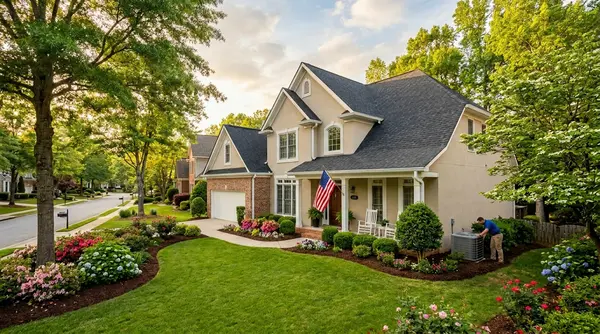
- Curb appeal—landscaping, paint, roof condition
- Staging and presentation—how the home photographs and shows
Two homes with the same comparative market value can perform very differently once showings start—the better-presented home usually earns more showings, stronger offers, and a higher sale-to-list ratio.
3. Appraised Value: What the Bank Will Support
Even if a buyer loves your home and offers full price or above, the lender still requires an appraisal to confirm the property's value justifies the loan. Appraisers use recent comparable sales, just like agents do, but they're conservative and bound by lending guidelines.
In 2026's balanced market, appraisers are especially conservative with VA and FHA loans. If you overprice and a buyer writes a contract at that inflated number, an appraisal shortfall can derail the deal—often resulting in a lower net than if you'd priced correctly from the start.
What Are the Real Risks of Overpricing My Watkinsville Home in 2026?
You've heard "don't overprice" before. But let's make it concrete with data and real consequences.
Shrinking Your Buyer Pool
Homes priced within 1% of their eventual sale price go under contract faster. Homes priced 5–10% above market can take 50–100% longer to sell, and often net less after reductions.
“Overpricing your Watkinsville home by just 3–6% can cost you $10,000–$15,000 in net proceeds and add months to your timeline.”
In Oconee County, where the average is 80+ days—heavily skewed by overpriced listings—pricing correctly means selling in 30–45 days. Overpricing by even 3–5% can push you past 90 days, where buyers begin to assume:
1. The seller is unrealistic or difficult to deal with
2. The home has hidden defects or issues
3. The price will drop further, so it's worth waiting
The Scarlet Letter Effect
In today's digital-first market, buyers see how long your home has been listed, every price reduction, and how it stacks up against other homes in the same price bracket on the major portals.
If your home sits, it often becomes invisible—not because buyers missed it, but because they've already dismissed it as overpriced or problematic. By the time you cut to the price you should have started at, the most motivated buyers have usually moved on.
Lower Final Net Proceeds
Let's illustrate with a realistic scenario for a home in Watkinsville.
Scenario A: Price it right
- Fair market value: $485,000
- List: $485,000
- Days on market: 32
- Sale price: $480,000 (98.9% of list)
- Carrying costs: $2,800
- Final net: $444,000
Scenario B: Overprice and chase down
- Fair market value: $485,000
- Initial list: $515,000 (6.2% over)
- 50 days, no offers → First reduction to $499,900
- 35 more days → Second reduction to $479,000
- Under contract day 95
- Sale price: $472,000 (91.7% of original list)
- Carrying costs: $8,400
- Final net: $432,000
Result: Overpricing cost this seller $12,000 in net proceeds and 63 extra days of stress.
Appraisal Gaps
Overpricing increases the risk that even if you get an offer, the appraisal will come in low. If the appraisal is $10,000–$15,000 below contract price, you must lower the price, negotiate to split the difference, or watch the deal fall apart. All three erode your net and extend your timeline.
Which Pricing Strategy Should I Use to Sell My Oconee County Home?
Pricing isn't one-size-fits-all. The right strategy depends on your goals, timeline, property condition, and micro-market dynamics in your neighborhood.
“Your list price is not a guess—it’s a strategy.
In 2026, the right pricing plan for Oconee County
is the difference between ‘on the market’ and ‘sold.’”
Strategy 1: Market-Aligned Pricing (The Default)
Definition: Listing at or very close to current market value, based on recent comparable sales and active competition.
When to use it: Balanced markets, typical homes, sellers who want predictable results, and properties likely to attract VA or FHA buyers.
Benefits: Maximizes qualified buyer pool from day one, generates steady showings, often produces offers near asking price within 2–4 weeks.
Example: A well-maintained 3-bed, 2-bath ranch in Barrow County, built in 2010. Recent sales cluster between $340,000 and $355,000. You list at $349,900 to sit in the middle and under the $350K search cap. The home gets 12 showings in 10 days, two offers, and sells for $347,000 in 18 days.
Strategy 2: Strategic Underpricing to Spark Competition (1–3% Below Market)
Definition: Pricing 1–3% under clear market value to drive showings, urgency, and multiple offers that can bid the price back up.
When to use it: Low-inventory neighborhoods where demand exceeds supply, move-in-ready homes in strong school zones, sellers on tight timelines.
Benefits: Creates strong early traffic, increases odds of multiple offers, can achieve at-or-above-market sale prices, often cuts days on market dramatically.
Example: A renovated 4-bed, 3-bath home near Oconee County High School has a fair market value of about $525,000. You list at $509,900—roughly 2.9% under market. In the first week, it gets 18 showings, 4 offers, and ultimately sells for $530,000 in just 12 days.
Strategy 3: Thoughtful Premium Pricing (For Unique Properties)
Definition: Pricing roughly 3–7% above recent comparable sales when your property's unique or superior features truly justify a premium.
When to use it: Special properties—significant acreage, custom builds, exceptional views, rare locations—and sellers with time flexibility.
Benefits: Tests the top of the market for standout properties, protects equity if a premium buyer appears.
Example: A custom home on substantial acreage in rural Oconee County, where recent similar sales range from $650,000–$700,000. Your property offers better improvements and privacy, so you list at $745,000—about a 6–7% premium. It sells in 42 days for $730,000 to a relocation buyer from a higher-cost market.
Strategy 4: Search-Bracket Pricing (Playing the Portal Game)
Definition: Pricing your home at key round-number thresholds (like $400,000 instead of $399,900) so it appears in both adjacent price brackets buyers use on search portals.
When to use it: When a home’s value sits near major price breakpoints (such as $300K, $350K, $400K, $500K, $750K) and online search is driving most of the buyer activity.
Benefits: Maximizes exposure by straddling two search brackets, aligning with how buyers set filters, while still allowing precise digits like 4 and 7 to signal a well-researched, compelling price.
Example: A Gwinnett County home has a fair market value around $402,000–$408,000. Instead of listing at $399,900 (visible only to buyers searching under $400K), you list at $400,000 so it appears in both “up to $400K” and “$400K–$450K” searches, expanding the buyer pool without discounting the home.
How Do Real Estate Agents Determine Home Value in Watkinsville?
Here's the transparent process I use to develop a pricing recommendation for sellers in Watkinsville, Oconee County, and the surrounding East Atlanta Metro counties.
Step 1: Understand Your Goals, Timeline, and Risk Tolerance
Before I pull a single comparable sale, I sit down with you to clarify what you need to net, when you need to move, and how much uncertainty you can tolerate. These answers decide whether we price for speed, for maximum dollars, or somewhere in between.
Step 2: Study the Macro Market—County Trends
I examine median prices, days on market, and sale-to-list ratios in your county. For example, Oconee County's 96.94% sale-to-list ratio tells me sellers who price correctly are capturing nearly all their asking price. Walton County's 98.28% and Barrow County's 98.88% show even tighter pricing precision.
Step 3: Drill Down to Neighborhood and Property Type
Then I drill into your micro-market—in Watkinsville, Bishop, or nearby—what actually sold, what's active, and what's pending in the last 60–90 days. I'm looking for true apples-to-apples comparisons: same school zone, size, age, and lot style.
Step 4: Adjust for Condition, Upgrades, and Functional Differences
On my walkthrough, I use my construction background to score condition, upgrades, and function against those comps. Then I adjust up or down in a straightforward way:
- Deferred maintenance vs. updated systems
- Kitchen/bath level, floors, paint, and lighting
- Layout and lot quality—privacy, views, slope, easements
Step 5: Account for Current Competition and Market Velocity
I overlay your home against current competition—how many similar listings are on the market and how fast they're going under contract. If three comparable homes have sat 60 days at $480K, the market is telling us that price point is too high.
Step 6: Factor in Likely Buyer Financing
I also think about how your likely buyer will finance the purchase, because that affects appraisals. In our $300K–$750K range, I see a lot of VA and FHA buyers in Oconee, Walton, Barrow, and Gwinnett.
Step 7: Build a Pricing Range and Choose a Launch Price
When the analysis is done, I give you a clear pricing range—usually a $15K–$25K spread—and we pick a launch price that matches your goals. We also set a review date 14–21 days after we hit the market so we're never guessing.
This process takes time, but it's the only way to price with confidence instead of guessing.
How Do I Know If My Home Is Priced Correctly in the First Few Weeks?
Listing your home is the beginning of the pricing conversation, not the end. The market will tell us quickly whether we've priced correctly, and my job is to interpret those signals and help you respond decisively.
The Critical First 14–21 Days
A well-priced home should generate serious interest within 2–3 weeks. During this window, I track:
1. Showing volume—How many buyers are scheduling tours?
2. Online engagement—Page views, saves, shares on major portals
3. Agent feedback—What are showing agents saying to their buyers?
4. Offer quality—Are we getting offers? Are they close to asking or lowball?
Interpreting the Signals
Strong showings (8–12) but no offers: Buyers are interested but not convinced the price matches condition or value. A targeted 2–4% price adjustment is often enough.
Low showings (0–4) and no offers: This usually signals a bigger pricing or visibility problem. We either need a larger 5–8% adjustment or a hard reset on photos, marketing, and presentation.
Strong showings and multiple offers: Congratulations—we priced correctly or slightly under market, and the strategy is working.
Strong showings and lowball offers: Buyers like the home but think it's overpriced. That typically calls for a smaller price reduction and/or clearer communication about upgrades and unique features.
When and How to Adjust
Waiting too long to adjust is costly. If showings and feedback say we've missed the mark after 2–3 weeks, I recommend one meaningful price change—often $10,000–$25,000, depending on price point—instead of a string of small cuts that make the listing look desperate.
Are VA Buyers Strong Buyers in Oconee County?
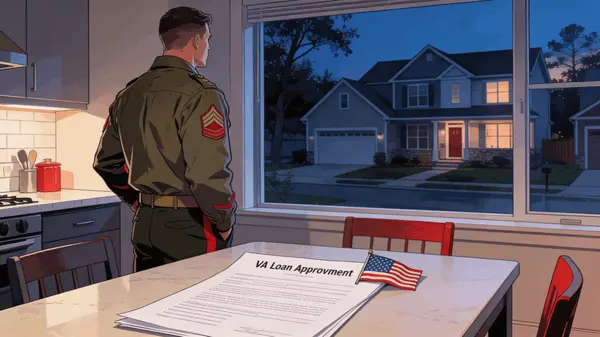
As someone who serves a significant number of veterans and active-duty military families through my work as a Military Relocation Professional, I want to address VA buyers specifically—because they're often the strongest, most committed purchasers in the market, yet they come with unique appraisal dynamics.
VA Buyers Are Strong Buyers
VA buyers are some of the strongest buyers in our market—100% financing available with strong VA backing, competitive interest rates and solid income, and clear timelines, especially for life-transition moves. Many of the transactions I close involve VA buyers, and they're consistently among my most prepared and pleasant clients to work with.
“VA buyers are some of the strongest,
most committed buyers in our market.
The key is pricing where a VA appraiser
can confidently support the contract price.”
VA Appraisals: Conservative but Predictable
VA appraisals follow the same basic comparable-sale model but with tighter guardrails. That's why pricing matters so much if your best buyer is VA:
- Recent comps within tight distance and time windows
- Limited room for big dollar adjustments
- VA Minimum Property Requirements for safety and condition
Pricing with VA Buyers in Mind
My goal is to price your Watkinsville or Oconee County home where a VA appraiser can comfortably support the contract price. That doesn't mean discounting for VA—it means using recent, defensible comps so your deal doesn't get derailed by an avoidable appraisal shortfall.
Note: A Comparative Market Analysis (CMA) prepared by a real estate agent is a pricing tool and is not the same as a professional appraisal conducted by a licensed appraiser. For complex valuation questions or formal opinions of value, consult a licensed appraiser.
Negotiating Terms Beyond Price
In a balanced 2026 market, smart sellers think beyond just price. We can often win or keep a deal together by adjusting terms instead of slashing list price:
- Seller-paid closing costs or rate buydowns
- Repair credits instead of full repairs
- Flexible possession dates or rentbacks
Important note on compensation: Compensation between brokers is negotiable and is addressed through the purchase and sale agreement, consistent with Georgia Association of REALTORS® forms.
What Questions Should I Ask a Realtor About Pricing My Home?
Whether you choose to work with me or interview other agents, you deserve transparent answers about how they'll price your home. Here are the questions a competent, data-driven agent should welcome:
Question 1: How Did You Arrive at This Price Recommendation?
What you're listening for: They should walk you through the specific comparable sales they used, the adjustments they made for condition and features, and how your home stacks up against current competition.
Question 2: Can You Show Me Recent Sale-to-List Ratios in My Area and Your Personal Track Record?
What you're listening for: The agent should show both market-wide ratios (Oconee County 96.94%, Walton 98.28%, Barrow 98.88%) and their own performance. Agents consistently achieving 97–100% are pricing accurately.
Question 3: What's Your Strategy If the Market Pushes Back on Our Price in the First 2–3 Weeks?
What you're listening for: Look for a clear review plan tied to actual numbers—showings, feedback, and online activity—at the 14–21 day mark.
Question 4: What Are the Comparable Sales You're Using, and How Are You Adjusting for Differences?
What you're listening for: They should show you the address, sale price, and key features of every comp, plus how they adjusted for differences like updates or lot quality.
Question 5: How Will You Know If We've Priced Correctly?
What you're listening for: Specific benchmarks for success—showing volume in the first week, online engagement metrics, quality of feedback, and timeline to offers.
Question 6: What's Your Average Days on Market?
What you're listening for: Market averages range from 42 days (Gwinnett) to 80 days (Oconee) depending on county. An agent whose average is significantly higher may be overpricing listings.
What Strong Pricing Conversations Look Like?
A data-driven, honest agent will:
1. Show you numbers, not just tell you what you want to hear
2. Discuss risks and trade-offs of pricing strategies
3. Be willing to challenge your assumptions if not supported by data
4. Commit to ongoing communication and adjustment based on market feedback
The duty I owe you under Georgia law is to exercise reasonable skill and care and to provide honest, data-driven guidance. That means I'll tell you the truth about price, even when it's uncomfortable, because I'm committed to protecting your equity and timeline—not just securing a listing.
Your Path Forward: Next Steps
You now have a pricing framework most sellers never see. You've learned:
- How list price tells your story on day one
- Why home value has three lenses—comparative, perceived, and appraised
- How overpricing shrinks your buyer pool and lowers your net
- Which pricing strategies fit which goals
- How early market feedback reveals if your price is working
- Why VA buyers are strong purchasers even though VA appraisals require conservative, data-backed pricing
The bottom line: Price it right from day one, and you control your timeline and maximize your net. Overprice, and the market will force corrections on its terms.
Ready to Talk About Your Home?
If you'd like a no-pressure pricing blueprint for your Watkinsville or Oconee County home, I'm here to help. I'll prepare a custom Comparative Market Analysis, walk you through the numbers, and show you exactly how I'd price and position your property.
Whether you're moving up, downsizing, or coordinating two transactions, my approach is data-driven, transparent, and aligned with your goals.
Disclaimers and Disclosures
General Information: This article is for informational and educational purposes only. It does not constitute legal, tax, financial, or appraisal advice. Consult appropriate professionals for advice specific to your situation.
Market Data: Market statistics referenced in this article are believed to be accurate as of February 2026 based on sources including Georgia REALTORS® and local MLS data. Market conditions change frequently, and past performance does not guarantee future results.
No Guarantees: No specific sale price, timeline, or outcome is guaranteed. Results depend on market conditions, property condition, buyer demand, pricing strategy, marketing effectiveness, and other factors outside the agent's control.
Broker Identification: Timothy Carithers is a licensed REALTOR® in the State of Georgia, affiliated with Real Broker, LLC. Georgia Real Estate License #404881. For questions or to schedule a pricing consultation, contact Timothy Carithers directly.
Recent Posts